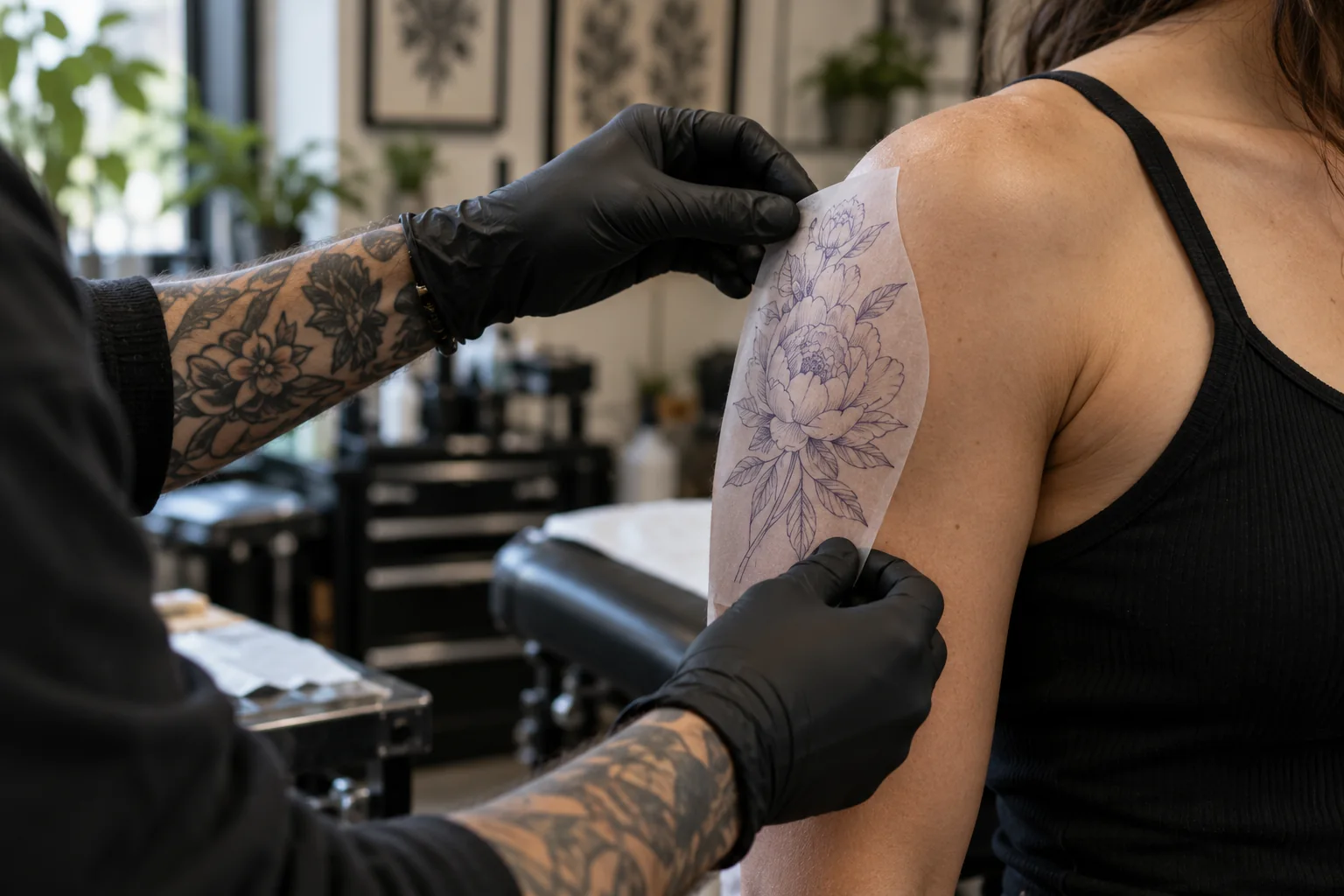
A tattoo is both an image and a placement. The same idea can feel very different on a forearm, shoulder, thigh or back because the body changes how the design is seen.
Start with how you want to wear it
Think about visibility first. Do you want to see the tattoo easily, share it often, or keep it covered for work or personal reasons? Consider the clothes you wear most and whether the placement will be covered, revealed or partly visible during a normal day.
Match the design to the body area
Long, flowing designs may suit areas such as the forearm, calf or side of the body. A compact motif may fit the upper arm, shoulder or ankle. Larger compositions often need enough room for their shapes and spacing to read clearly. These are starting points, not rules—the design and your body are individual.
Ask the artist to consider how the design will look from more than one angle. A piece that wraps around an arm or leg should be planned as a whole, rather than as a flat picture placed on one side.
Think about movement and everyday comfort
Some areas bend, stretch or rub against clothing more than others. That can affect how a design is placed and how comfortable it is to show or protect during the healing period. Your artist can explain the practical considerations for the placement you have in mind. If you have a skin or health concern, raise it with the studio before booking and ask a qualified clinician when appropriate.
Compare a few placements before you decide
- Forearm: easy to see and well suited to designs that follow the length of the arm.
- Upper arm or shoulder: can be covered by many sleeves and offers room for a piece that curves with the shoulder.
- Thigh: offers a broad area for larger compositions and is usually easy to cover with clothing.
- Back: allows room for a wider or more connected design, though you may not see it as often yourself.
- Ribs or side: can follow the shape of the torso; ask the artist how the design will sit when you move.
These descriptions are practical prompts, not a ranking. Visibility, comfort and personal preference matter more than a trend or a rule about who “should” wear a tattoo in a certain place.
Review the stencil before the session starts
At your appointment, take time to check the stencil in a mirror and from different angles. Ask to see whether the size and direction suit the area. Speak up if anything feels off; placement is part of the design conversation.
Frequently asked questions
Where should I put my first tattoo?
Start with the design you want and the way you want to wear it. Discuss size, visibility and the specific body area with your artist before choosing.
Can I change the placement on the appointment day?
Ask the studio about its process. The final stencil placement should be reviewed and agreed with the artist before tattooing begins.
Should I choose the placement before I book?
Have a preference, but you can mention that you are open to advice. The artist can help compare placements once they understand the design and size.
HAVE AN IDEA IN MIND?
Let’s plan your tattoo.
Share your concept, placement, approximate size and references. The studio will review your request and follow up about availability and next steps.
Request an appointment